Amagenta Studio
From brand book to operating system
Amagenta Studio, a Colombian branding agency with international clients, wanted to stop delivering brand books nobody reads and start delivering a system that follows them on its own. Since July 2026 we have been building INWARD, an AI Brand OS where each client’s marketing team loads its brand DNA, designs templates and lets any employee turn one sentence into a professional, on-brand piece. In fourteen weeks it went from first commit to a live demo at GoFest and to the door of its first enterprise pilots.
Duration
Ongoing · since July 2026
Started
July 1, 2026
From an empty repository in July to a closed V1 MVP in October, with a live event demo along the way
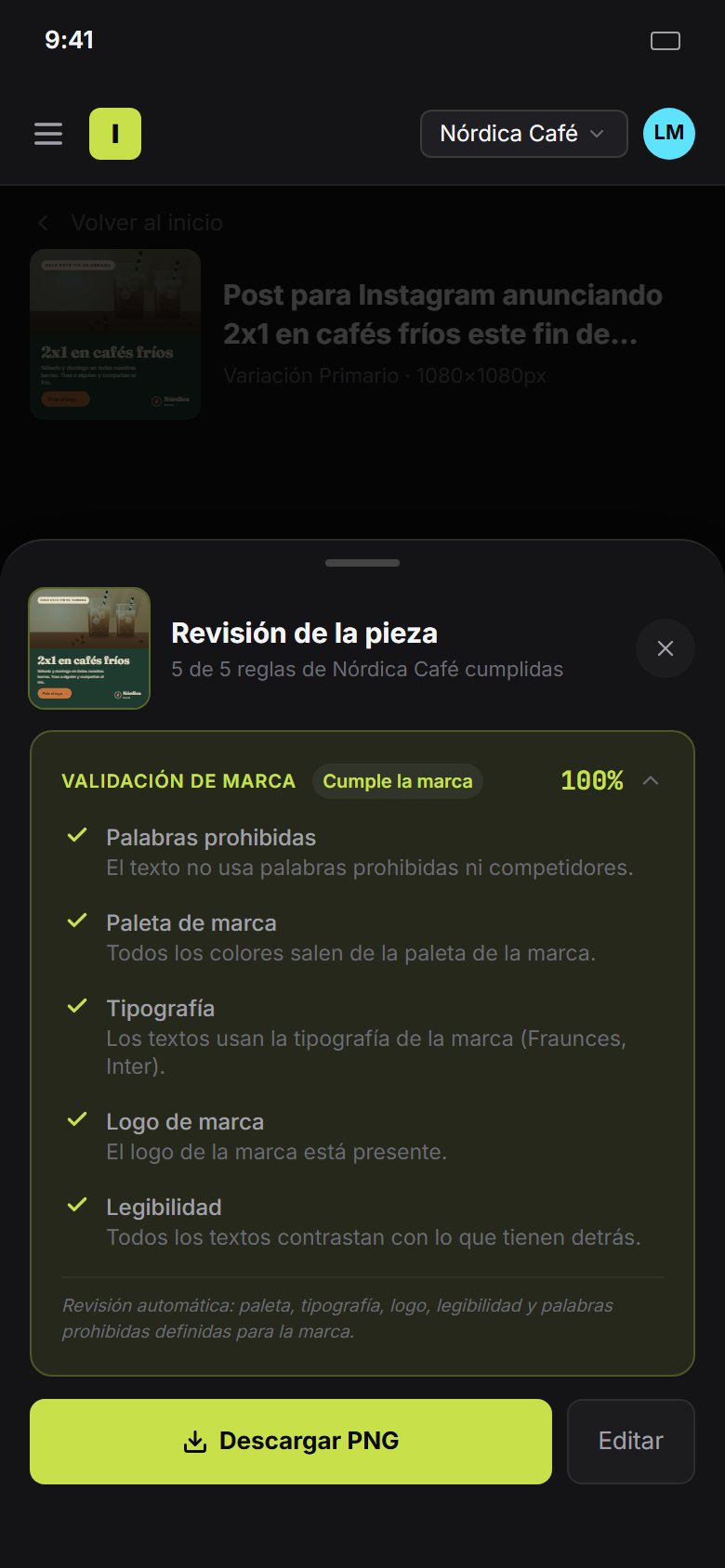
Banned words, palette, brand typography, logo presence and legibility, verified automatically and shown to the user
Across 14 formats, from social posts to roll-ups, most of them universal starters that take on each brand
Agency, client companies and employees strictly isolated, red-teamed before the first pilot
Amagenta’s knowledge of every client brand lived in PDFs, loose folders and generic AI prompts, and every internal piece pulled the design team in.
The agency wanted to turn its method into a product it could sell to companies.
- — The brand book governed nothing: rules lived in static PDFs, were applied from memory and broke in every internal piece
- — Design as the bottleneck: any communication, however small, from HR, sales or events, had to go through the creative team
- — Generic AI, generic results: each person used their own AI tool, with no brand context and no quality control
- — Multi-company from day one: one product serving many companies at once, with strict isolation and different roles for the agency, marketing and employees
A multi-company Brand OS in production, built from scratch and fully owned by Amagenta, where brand rules are not a document to consult but the architecture every piece runs through.
- + Brand DNA Engine · identity loaded once, through an AI conversation or a quick form: logo, palette with roles, typography, tone, audiences and banned words, turned into rules the machine understands
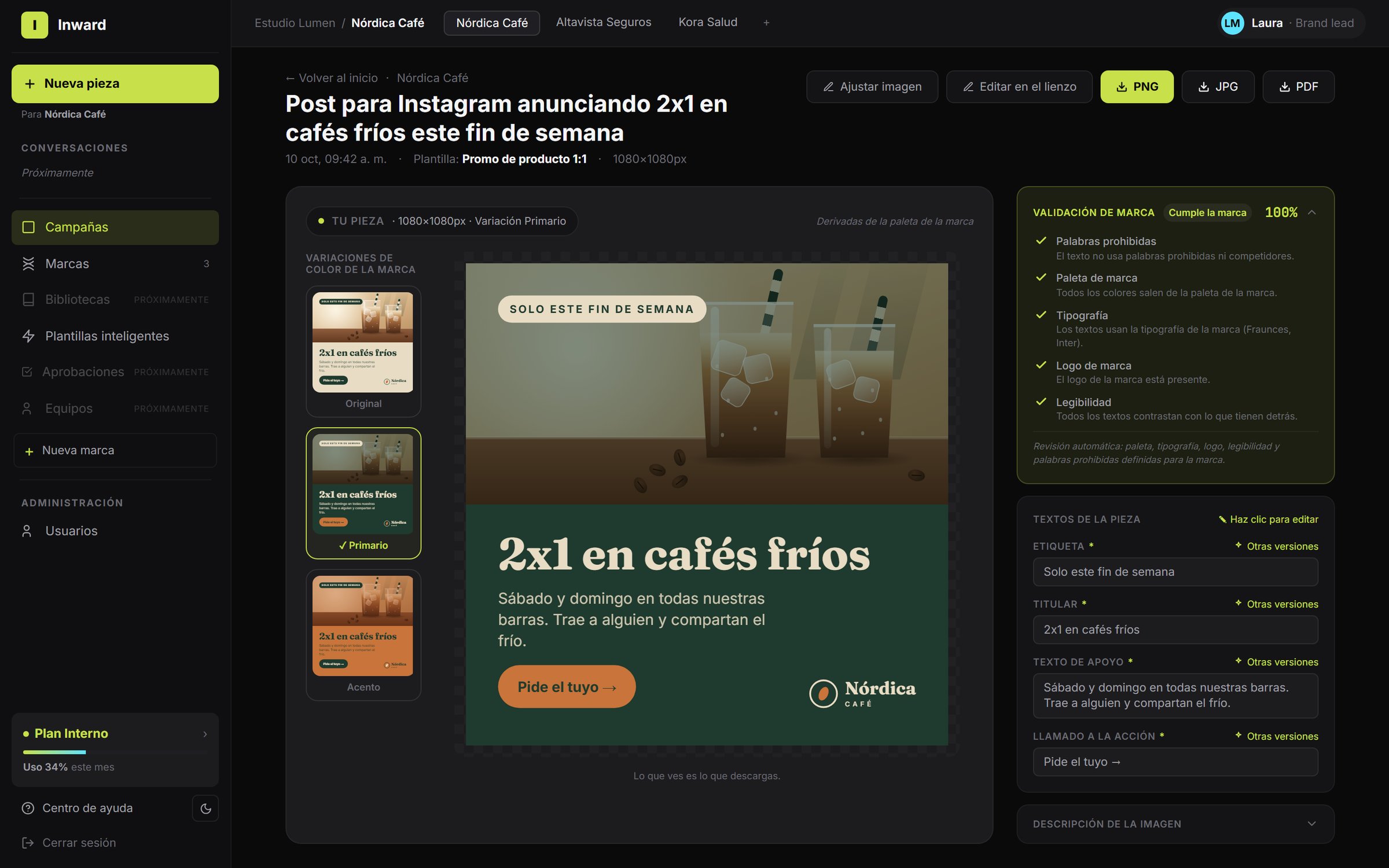
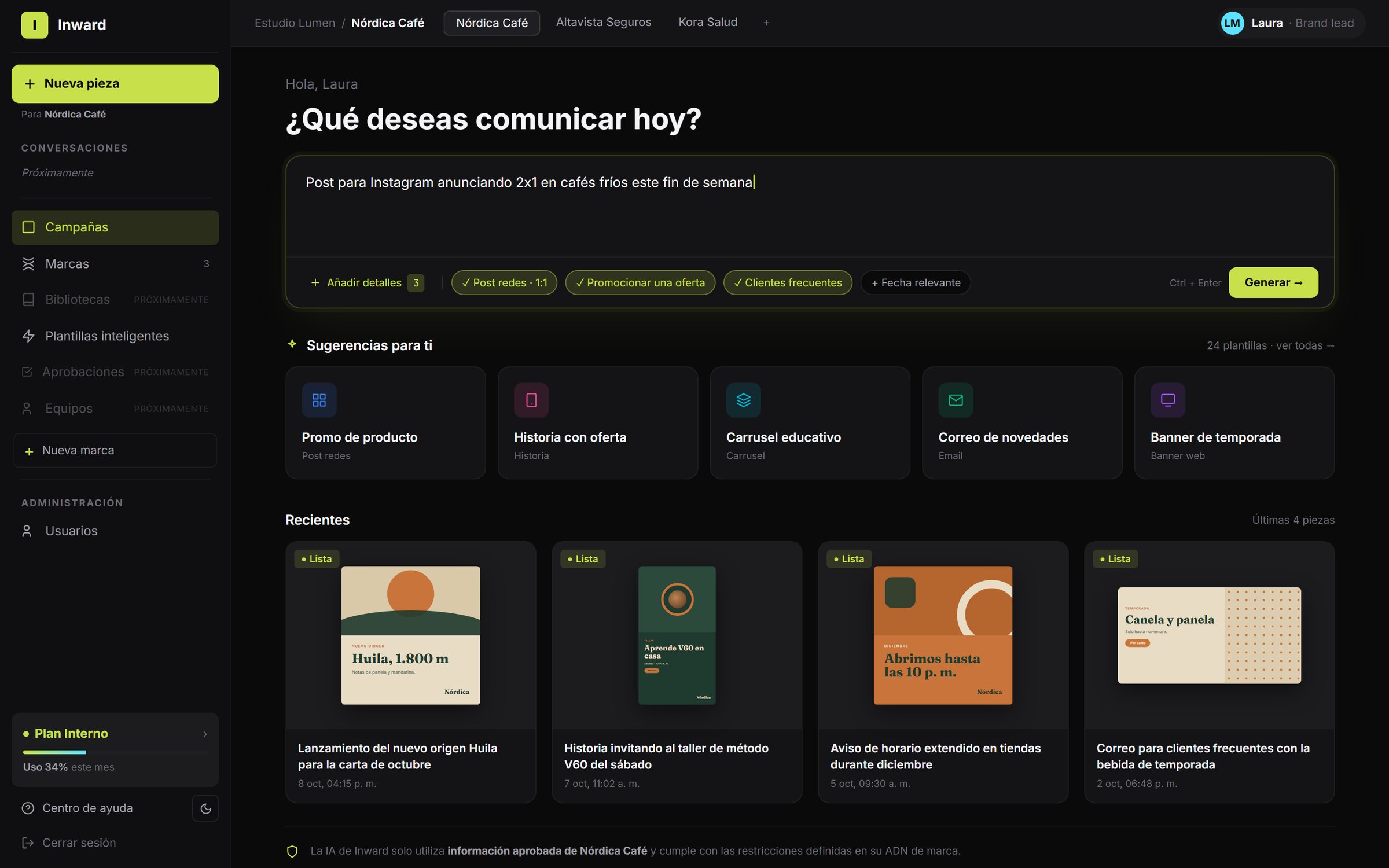
- + Prompt-to-piece generation · one sentence in natural language becomes an on-brand piece with color variations; the AI decides the content and a deterministic engine composes the design
- + Automatic brand validation · five rules checked on every piece and a blocking lint on every template before it can be published
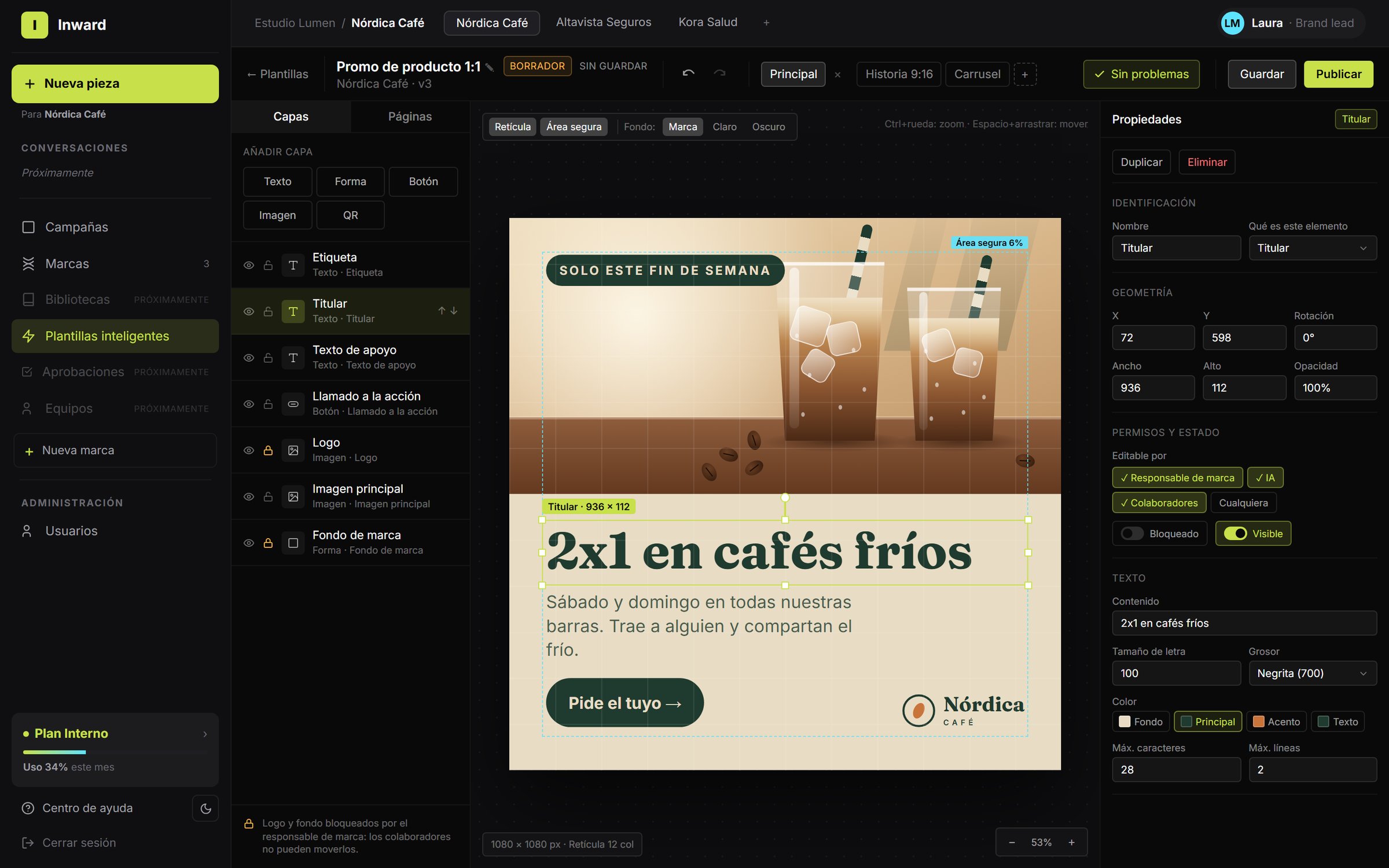
- + Template Lab · an in-house canvas editor where marketing builds and publishes templates with layers, grid, safe area and locked or editable fields
- + Render engine · PNG, JPG and PDF exports from the same render model as the editor, with any brand typeface loaded at render time
- + Multi-tenant platform and event mode · agency, client companies and employees with distinct roles under row-level security, plus a public, login-free kiosk mode with a database-enforced generation quota
Inside the build.
Brand, interface and system — shown as they shipped.
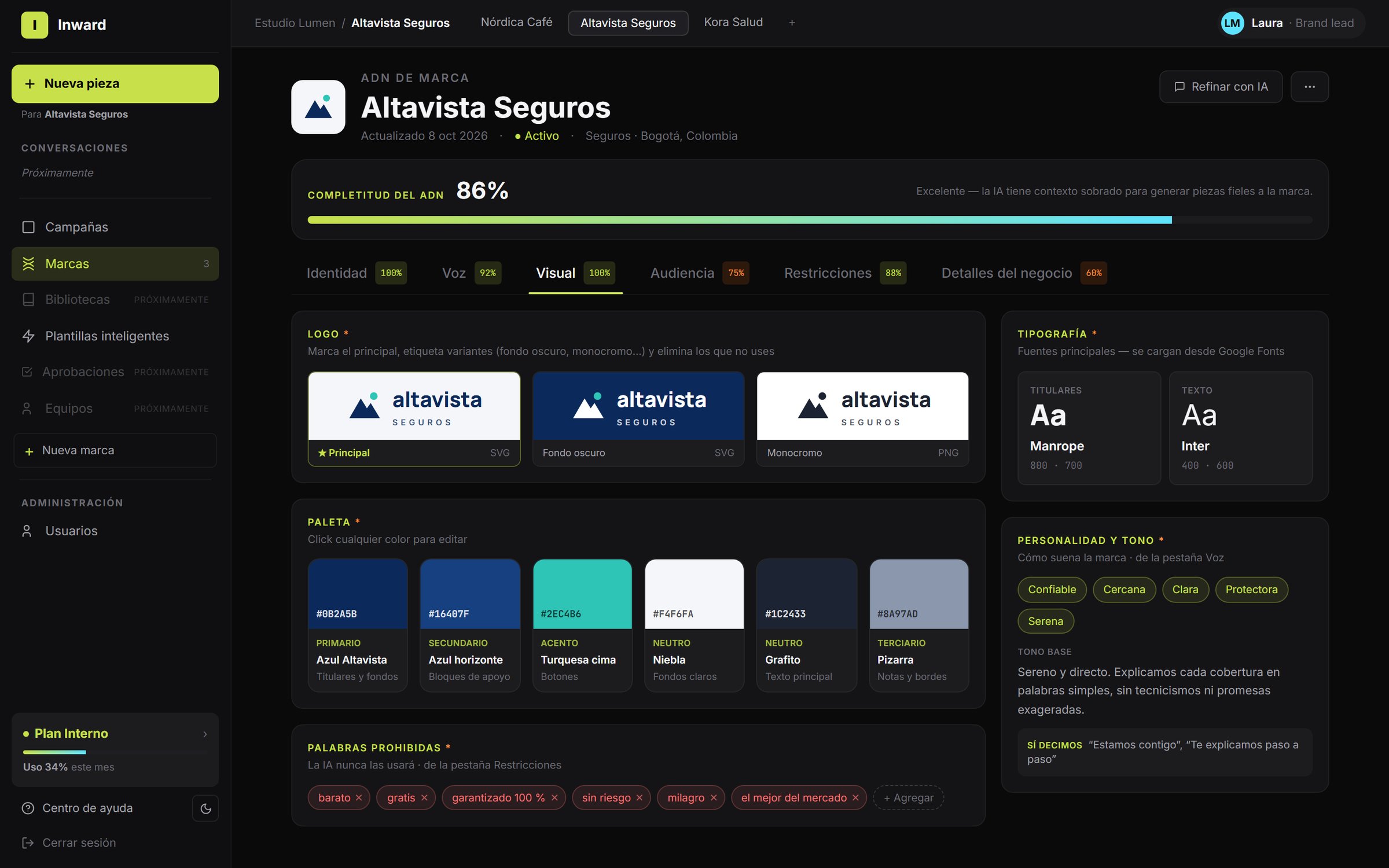
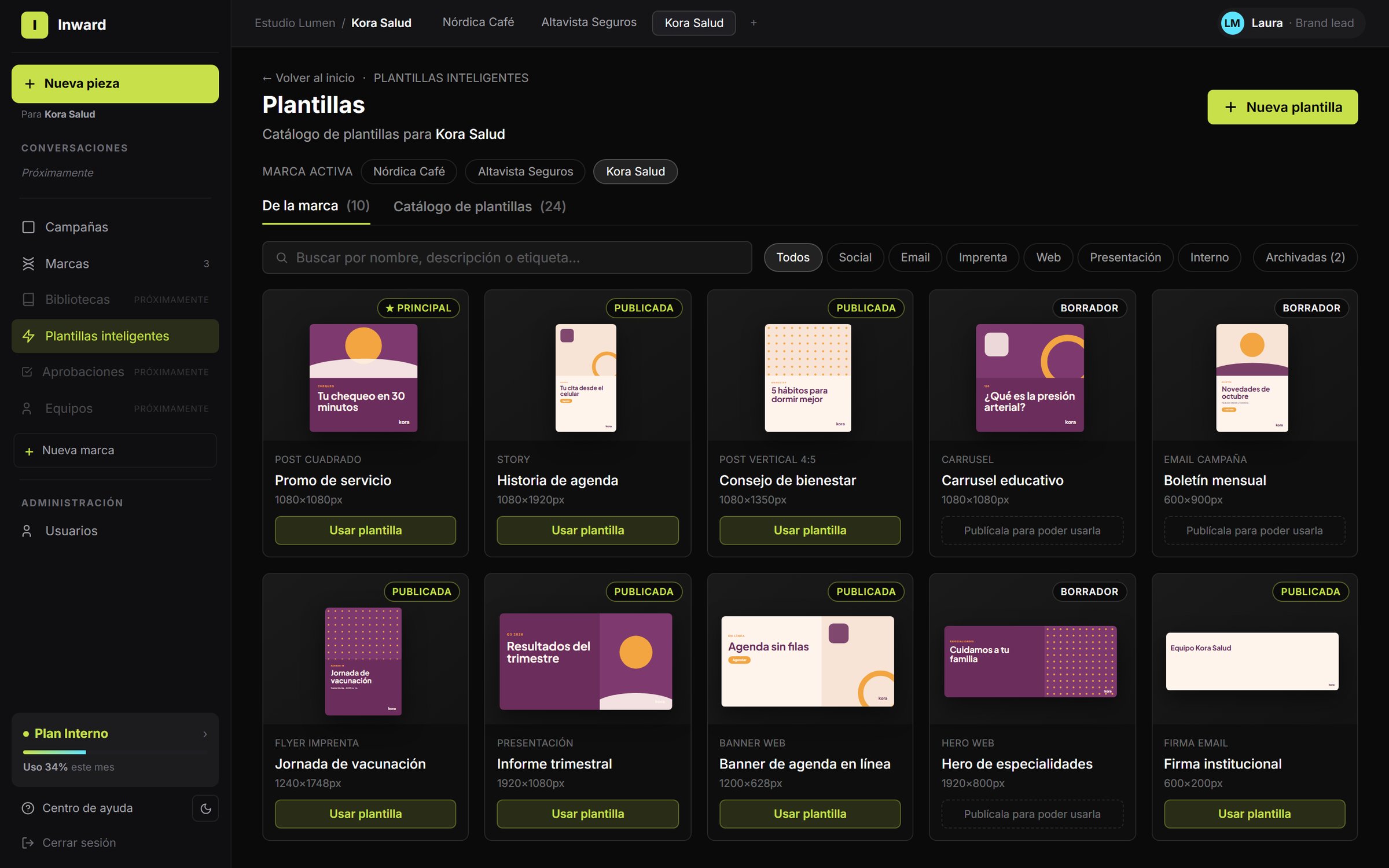
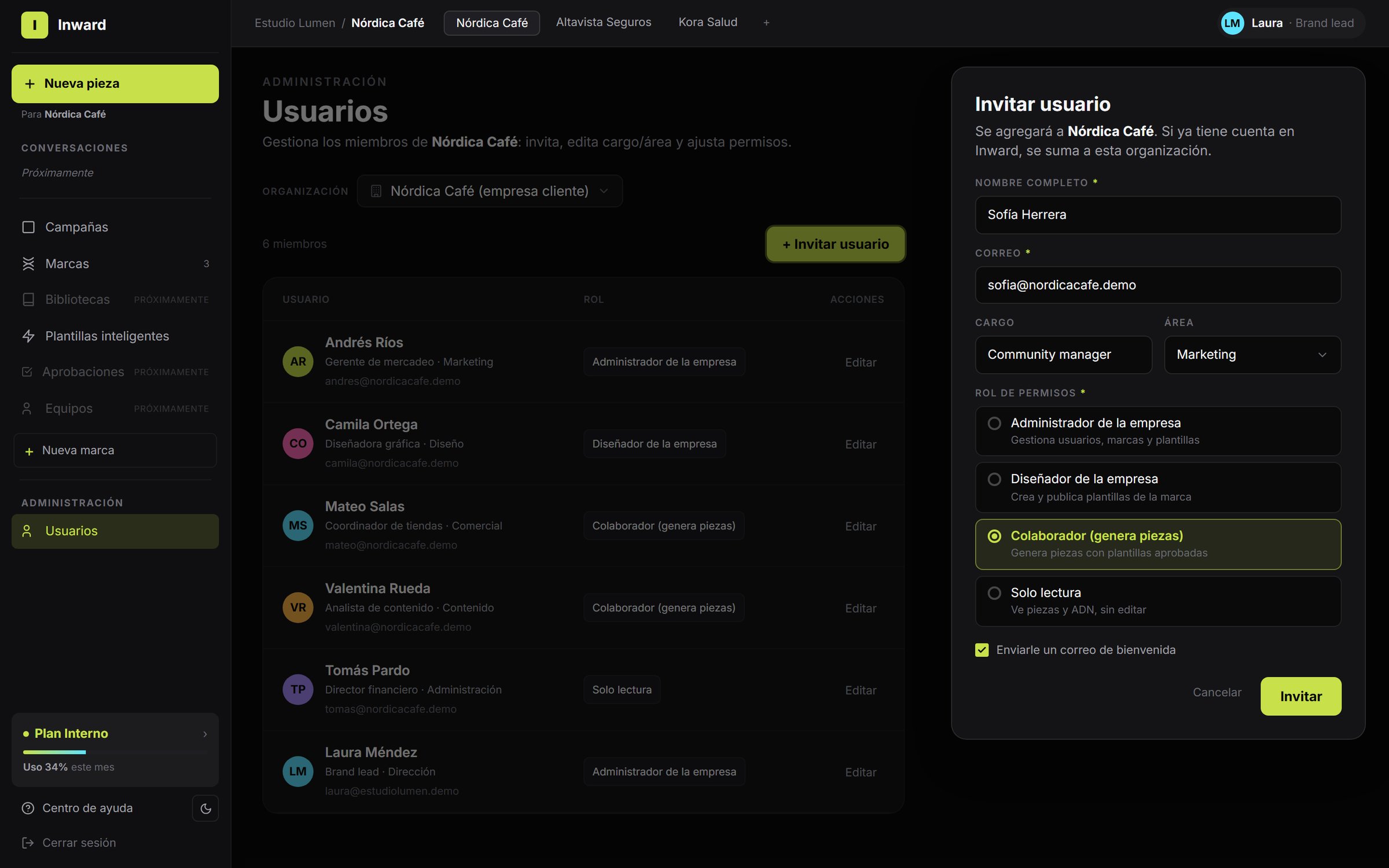
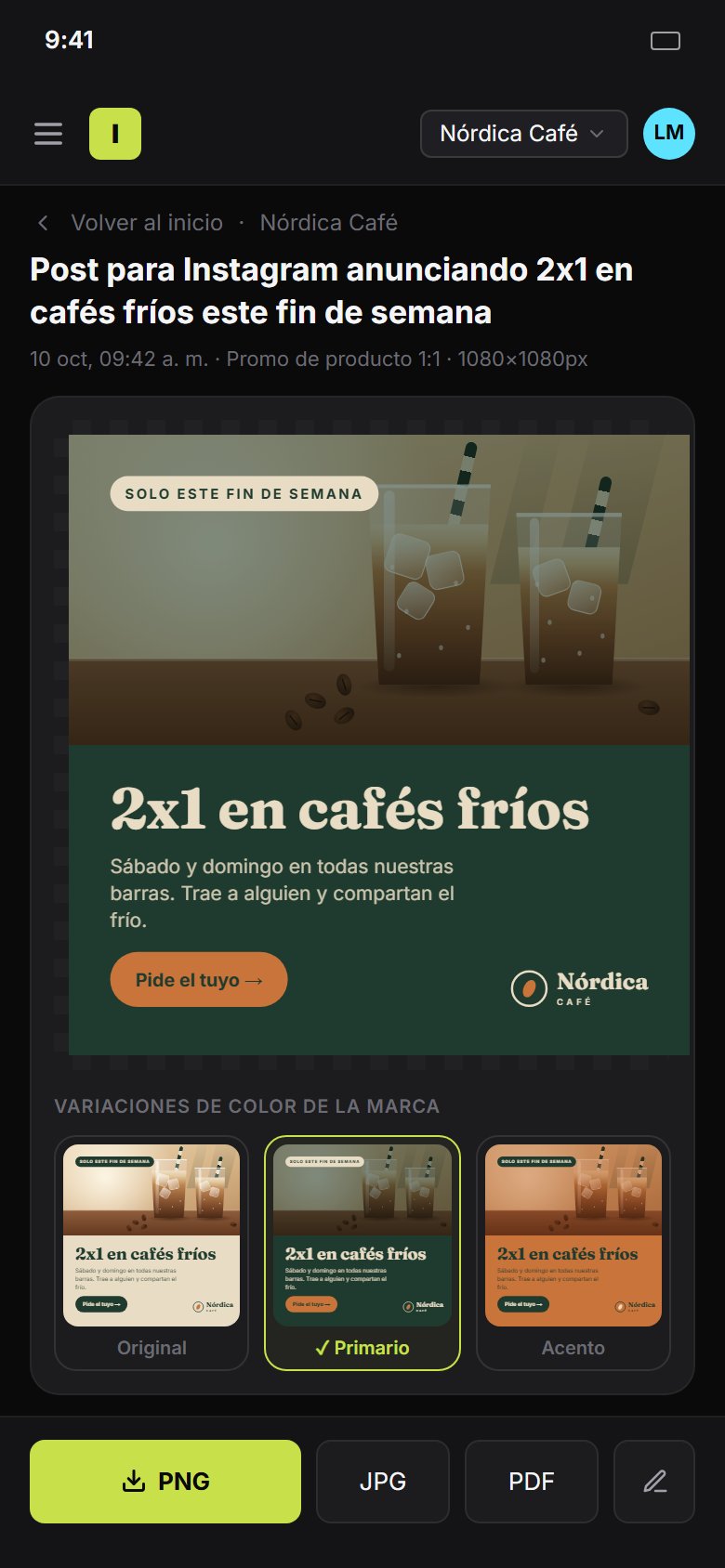
Brand governance is the architecture.
INWARD looks like a design editor, but what makes it work is invisible: a multi-company data model under row-level security, an engine that turns brand rules into composition decisions, an AI layer with guardrails and a deterministic render pipeline. Roughly half of the codebase is engine, data and security.
The AI proposes, the engine composes
Gemini reads intent, channel and format and returns schema-validated JSON: a template choice and its text. A deterministic engine builds the piece, so logo, typography and colors always come from the brand DNA, never from the model.
Governance by architecture
Templates declare which layers are editable and which are locked, and by which role. An employee cannot step outside the brand because the editor does not allow it, and every piece keeps a frozen copy of its template so redesigns never break history.
Variations that are still the brand
Each piece offers Original, Primary and Accent variations that tint the veil and background with brand colors only, recalculating text color by WCAG contrast against its effective background so every variant stays legible.
One render model, four outputs
Editor, preview, PNG and PDF share the same geometry and type metrics, with a per-family width factor so headlines never get cut. Any brand typeface loads at render time, with a failure cache so a slow font never takes an export down.
Red-teamed before the first pilot
Permissions across studio and client companies are resolved in the database with security-definer functions and a trigger that blocks self-promotion. Before the pilots, QA agents attacked the platform on purpose; every critical finding was closed with migrations and re-verified.
Hybrid AI Coding
Senior WebMinds engineers own the architecture, the product decisions and every conversation with Amagenta, while AI agents (Claude Code) handle implementation under their direction. Every change goes through independent QA agents for function, UX, security and documentation before it reaches production.
Technologies & Tools
The tech stack powering this solution


Beyond the numbers, we delivered a system that transformed how this client operates.
A brand that enforces itself
Brand rules stopped being a PDF: the engine applies them to every piece and the platform shows they were met. An employee with no design training produces professional communication from one sentence.
From agency to software company
INWARD turns Amagenta’s method into a multi-company product it owns and can sell to enterprises, with its first pilots in preparation.
Enterprise-ready from the first pilot
Row-level security across the whole data model, roles by organization type, a red-team before the first client and a 57-case acceptance suite delivered with its limits declared.
- Jun 2026WebMinds proposal: a multi-brand Brand OS with AI
- Jul 1, 2026First commit: monorepo and multi-company schema under row-level security
- Jul 2026Conversational brand onboarding, Template Lab on canvas, 58 universal starter templates, and a shift with Amagenta from more templates to the brand-rules engine and on-brand variations
- Aug 2026Product alignment with Amagenta, login-free event mode, light and dark themes and adversarial QA of the engine
- Aug 26–29, 2026Live demo on tablets at Amagenta’s GoFest stand, visitors generating pieces without an account
- Oct 2026V1 MVP closed: team templates generating pieces, tinted variations, piece editor, brand typography, security red-team and pilot onboarding without SQL; 57-case acceptance suite delivered
- OngoingAcceptance testing with Amagenta; enterprise pilots next
Ready to achieve similar results?
Let's discuss how we can transform your business with a tailored digital solution.